
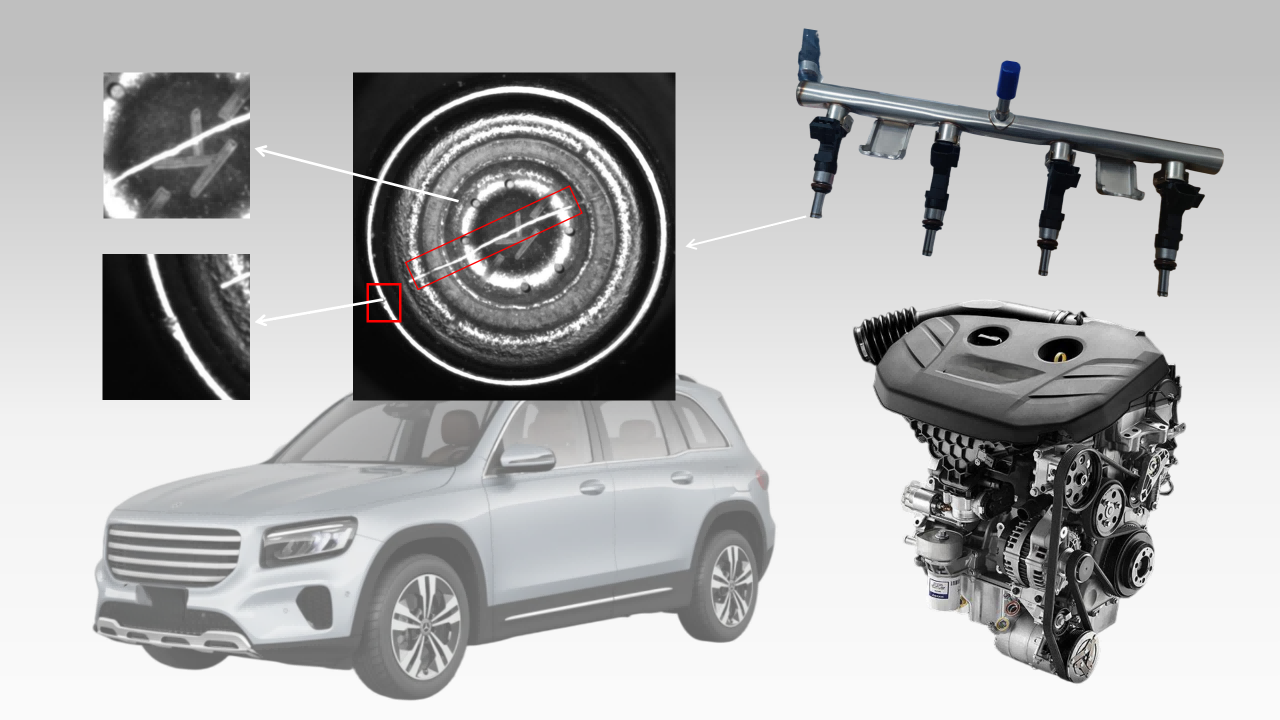
4U IPC for nozzle machine-vision inspection
In the precision component manufacturing of the automotive industry, the quality of critical parts such as fuel injectors and nozzles directly determines engine performance and emission compliance standards. As the core computing unit of vision inspection systems, the HWAINTEK 4U rack-mount industrial computer delivers powerful image processing and AI inference capabilities, supporting high-speed, multi-station, high-precision defect detection to realize 100% in-line quality control for nozzle products.
Loading & Assembly Stage: Automatic Material Handling and Precision Assembly
This stage covers front-end processes including automatic loading of nozzle components and cap assembly, laying the foundation for efficient and stable inspection workflows.
Typical process modules:
Automatic Loading: SCARA robots pick nozzles from material trays and accurately place them at inspection stations, enabling high-speed cyclic handling from start to end position.
Cap Assembly: 6-axis robots complete precise alignment and fitting of nozzle covers to guarantee zero assembly position deviation.
Multi-Camera Pre-Positioning: Camera 1 and Camera 2 work collaboratively to locate workpieces and conduct preliminary appearance verification.
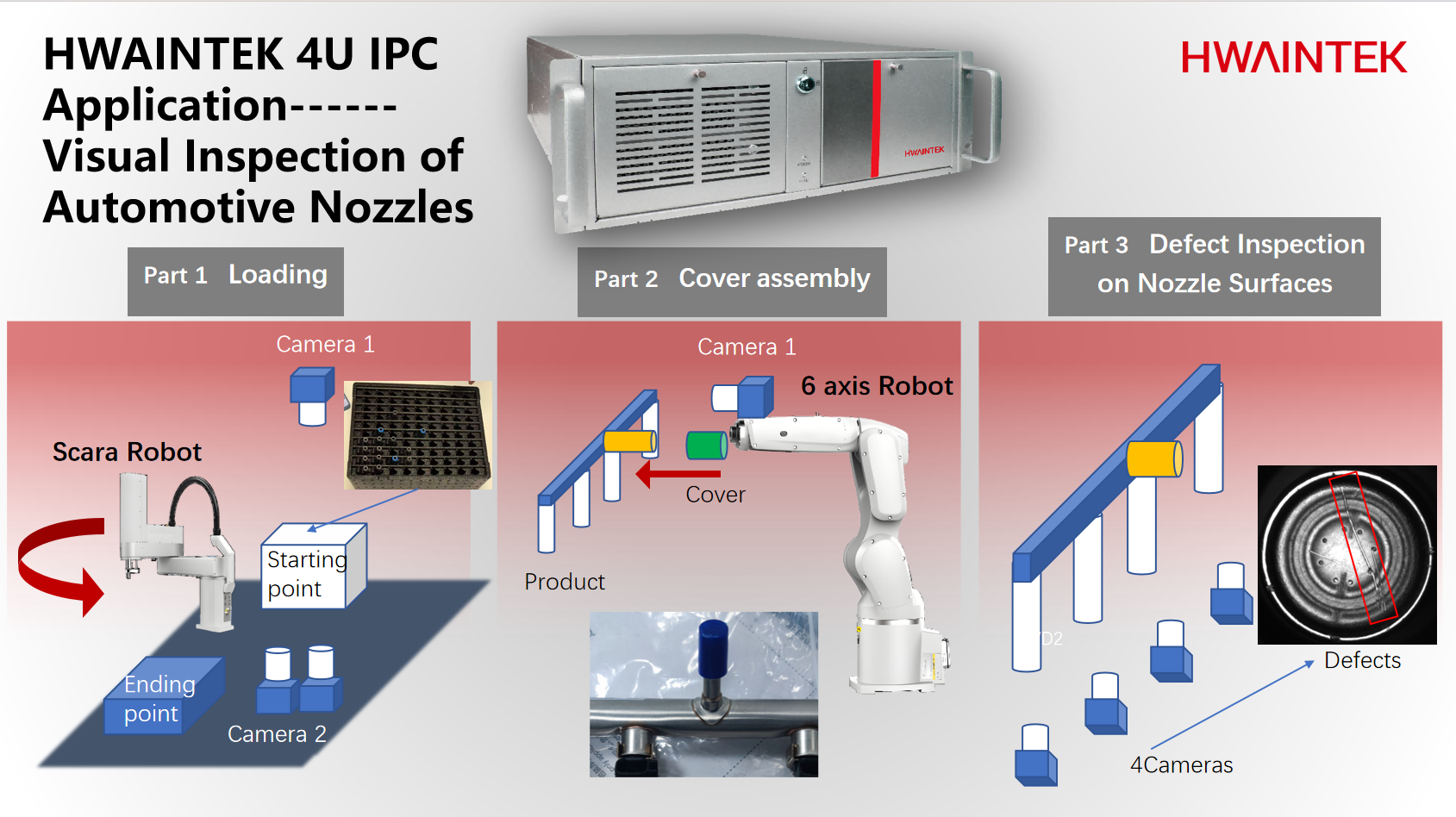
The HWAINTEK 4U industrial computer serves as the central hub for system control and vision processing. Equipped with high-performance multi-core processors and abundant I/O interfaces, it executes real-time robot motion control, camera triggering and image acquisition, delivering multi-axis synchronized coordination with millisecond-level response latency. Its industrial-grade stability enables long-term continuous production line operation to meet high takt rate requirements for automotive component manufacturing.
Surface Defect Inspection Stage: High-Precision Multi-Angle Visual Verification
This core section focuses on defect detection on critical nozzle surfaces to guarantee consistent product quality.
Key process modules:
Multi-Camera High-Resolution Imaging: Four industrial cameras perform comprehensive scanning of the internal and external surfaces of nozzles from diverse perspectives.
Deep Learning Defect Recognition: Real-time identification of micro defects including scratches, pinholes, foreign contaminants, deformation and surface stains.
Automatic Judgment & Sorting: Automatic classification and rejection of OK and NG workpieces based on inspection results.
Leveraging powerful GPU/NPU acceleration, the HWAINTEK 4U rack-mount industrial PC efficiently runs deep learning vision models, supporting parallel data processing and real-time inference for multiple high-definition cameras. Its expandable interfaces simultaneously manage multi-camera arrays, robots and PLCs to build an integrated closed-loop vision-motion-control system, ensuring stable detection accuracy for micron-level tiny defects.
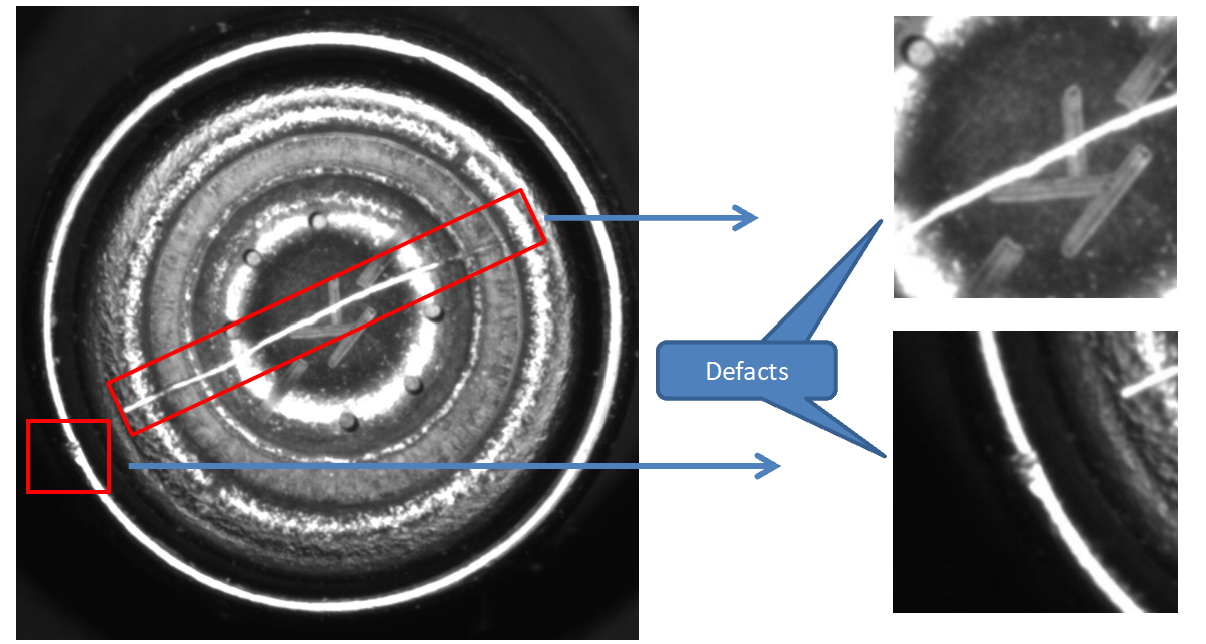
Topology Architecture for Nozzle Machine Vision Inspection Systems
Centered on the HWAINTEK 4U industrial computer, this topology forms an efficient closed-loop control framework:
Perception Layer: Multiple industrial cameras, light sources and sensors connect directly to the industrial PC via GigE, USB3.0 and other communication interfaces.
Computing & Control Layer: The industrial PC runs image processing software, AI inference engines and motion control programs to complete defect analysis and coordinate robots and actuators.
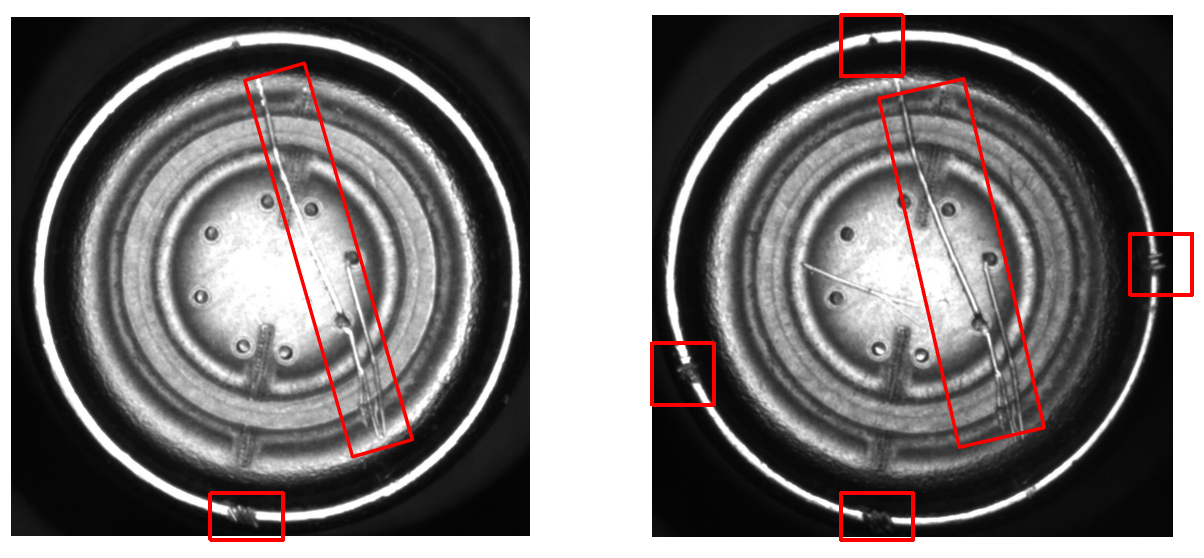
Actuation & Management Layer: Drives robots and sorting mechanisms through fieldbuses including EtherCAT and PROFINET, and connects upward to MES systems to realize full traceability of inspection data and automatic quality report generation.
This architecture ensures efficient, stable operation covering the entire workflow from loading and assembly to precision defect inspection.
Conclusion
Boasting high-performance computing power, abundant expandable interfaces and robust industrial reliability, the HWAINTEK 4U rack-mount industrial computer acts as the core computing unit for automotive nozzle component vision inspection systems. It empowers manufacturers to implement automatic, high-precision and intelligent quality management, drastically boosting inspection efficiency and production yield, and meeting the industry's stringent demands for high-reliability automotive component production.